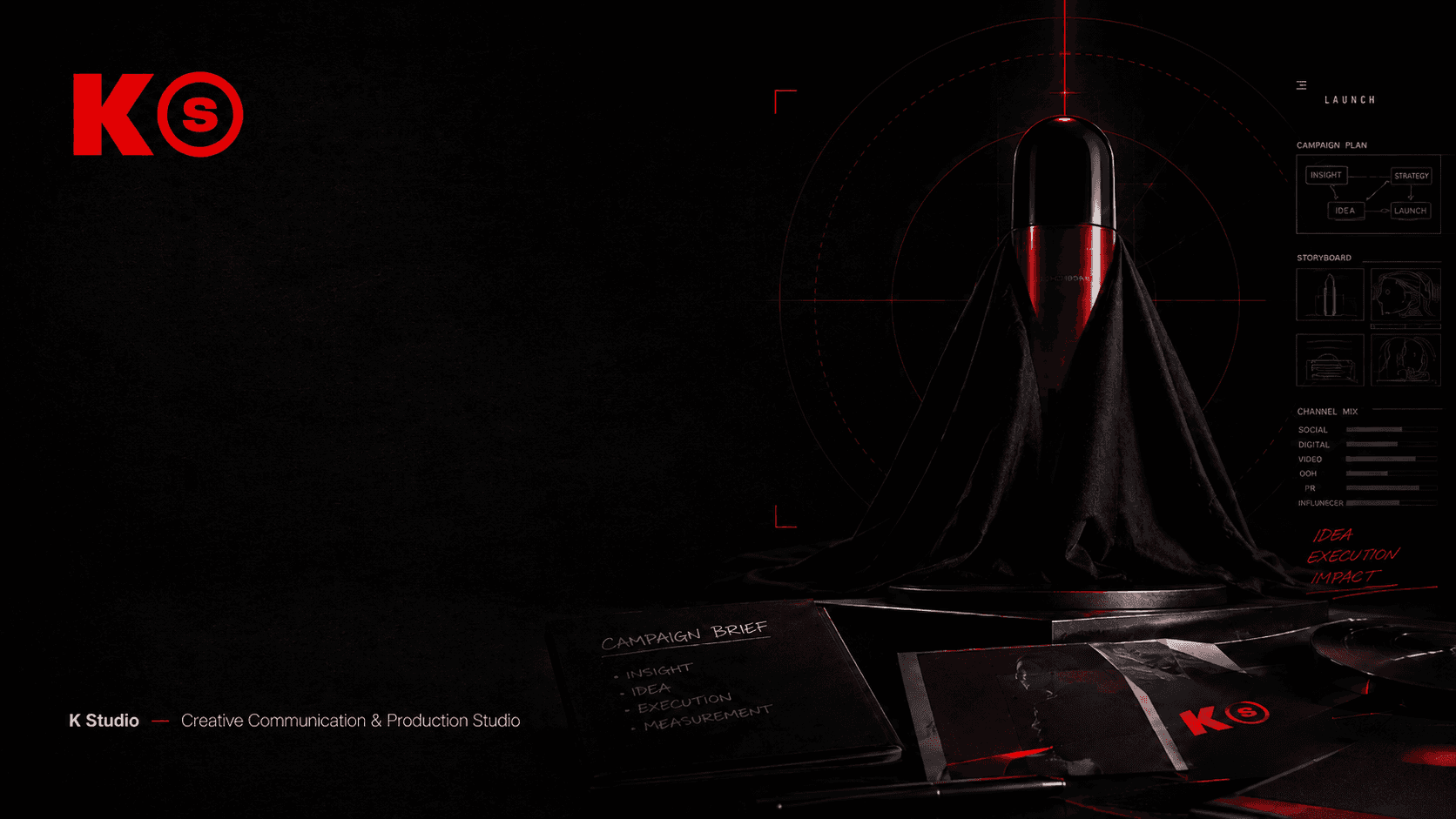
How to Plan Your Advertising and Communication
Budget for a Product Launch Campaign
By K Studio
Creative Communication & Production Studio
June 12, 2026
How to Plan Your Advertising and Communication Budget for a Product Launch Campaign
When a company prepares to launch a new product, service, brand campaign, or yearly communication plan, one of the first questions is usually not creative.
It is financial.
How much should we spend?
Where should the budget go?
Do we need an advertising agency, a communication agency, a production company, or a creative partner that can bring everything together?
A strong product launch campaign is not built from one video, one event, or one ad. It is built from a clear communication strategy, a creative concept, and the right production plan to turn that message into assets people can actually see, feel, and remember.
This is where the role of a creative communication & production studio becomes important.
A creative communication & production studio helps brands connect the strategic side of communication with the practical side of production. It is not only about creating ideas. It is about turning those ideas into campaigns, commercials, events, brand experiences, and content that can be executed with clarity and impact.
At K Studio, this is the space we occupy.
We help brands move from communication strategy to creative execution.
What should an advertising and communication budget include?
A communication budget should cover everything needed to take a message from strategy to execution.
For a product launch campaign or annual brand campaign, that usually includes:
Communication strategy
Creative concept development
Campaign messaging
Commercial production
Video production
Photography
Social media campaign assets
Motion graphics or animation
Event production
Brand activation content
Paid advertising assets
Post-production
Adaptations for different channels
The mistake many companies make is separating the idea from the execution too early.
They plan the campaign in one place, buy media somewhere else, and then look for production support at the last minute.
This often creates a gap between what the brand wants to say and what actually gets produced.
A better approach is to involve a creative communication & production studio early, so the campaign idea, communication strategy, production plan, and final assets are built as one connected system.
Product launch campaigns need more than advertising
When brands search for a product launch campaign agency, product launch communication plan, advertising campaign partner, or creative production studio, they are usually looking for more than someone who can make an ad.
They need a partner that can help answer deeper questions:
What is the story behind the launch?
Who are we speaking to?
What should the audience understand immediately?
What content do we need before, during, and after the launch?
Should the launch include a commercial, an event, social content, a brand film, influencer assets, internal communication, or all of these?
A product launch campaign should create momentum.
That means the campaign needs to work across multiple touchpoints, not just one piece of content.
For example, a launch may require…
A hero video to introduce the product.
Short-form social content to drive awareness.
A launch event or brand experience to create attention.
Photography and campaign visuals for digital platforms.
Motion graphics to explain the product clearly.
Paid media assets adapted for different formats.
Behind-the-scenes or event content to extend the life of the campaign.
The more connected these assets are, the stronger the launch becomes.
This is why brands need more than production.
They need creative communication and production working together.
How companies should think about next year’s advertising spend
When planning next year’s advertising and communication spend, brands should not only ask “How much media should we buy?”
They should also ask.
What campaigns are we launching next year?
What moments will matter most for the brand?
What products, events, or announcements need communication support?
What creative assets will we need repeatedly?
Where do we need consistency across video, social, events, and brand communication?
Which parts should be handled internally, and which parts need an external creative communication & production studio?
This is where communication budget planning becomes strategic.
A good annual communication budget should separate spend into clear categories.
Strategy and creative direction.
Campaign production.
Commercial and video production.
Social and digital content.
Event and brand experience production.
Paid media assets.
Post-production and adaptations.
This helps companies avoid reactive spending, last-minute production decisions, and disconnected campaign assets.
What is a creative communication & production studio?
A creative communication & production studio is a partner that helps brands define what they need to say and then produce the assets that bring that message to life.
It combines…
Communication strategy.
Creative direction.
Campaign thinking.
Commercial production.
Event production.
Brand experience production.
Content production.
Post-production and delivery.
This is different from a traditional production company that only executes a brief.
It is also different from a traditional communication agency that may create the strategy but not handle the full production reality.
A creative communication & production studio sits between both worlds.
It understands the brand message, the campaign objective, the audience, the budget, the production process, and the final assets needed across channels.
For brands, this creates one major advantage.
The idea and the execution stay connected.
Do you need an agency or a creative production partner?
Many brands search for a communication agency, advertising agency, creative agency, video production agency, or campaign production partner without knowing exactly which type of partner they need.
The difference matters.
An advertising agency may focus on campaign strategy and media.
A communication agency may focus on messaging, PR, and brand narrative.
A video production company may focus on filming and editing.
A creative communication & production studio connects the message, the idea, and the execution.
At K Studio, we work in that space between communication strategy and creative production.
We help brands turn communication plans into campaigns, commercials, events, brand experiences, and content.
That means we are not only thinking about what the campaign should say.
We are also thinking about how it will be produced, filmed, captured, edited, adapted, and delivered across the channels where the audience will experience it.
Why creative production should be part of the budget conversation early
Creative production is often treated as the final step.
But in reality, it should influence the campaign plan from the beginning.
The production approach affects the budget, the timeline, the creative possibilities, the event experience, the number of assets, and the final quality of the campaign.
When production is planned early, brands can make smarter decisions:
One shoot can create multiple campaign assets.
One event can become weeks of content.
One commercial concept can be adapted into social videos, paid ads, reels, photography, and internal communication.
One product launch can create a complete communication ecosystem instead of isolated pieces.
This is how brands get more value from their advertising and communication budget.
How K Studio helps brands plan and produce campaigns
K Studio is a creative communication & production studio based in Barcelona.
We help brands, companies, and organizations turn communication strategy into creative production.
Our work connects the strategic and creative side of campaigns with the practical execution needed to make them real.
We support product launches, annual campaigns, commercial production, event content, brand experiences, social media assets, and audiovisual production.
Our role is to help brands move from…
“We need a campaign”
to…
“We know what we are saying, what we are producing, where it will live, and how each asset supports the larger communication goal.”
Whether a company is planning a new product launch campaign, reviewing next year’s advertising budget, preparing a brand activation, or looking for a creative communication & production studio in Barcelona, the goal is the same.
Create communication that is clear, consistent, well-produced, and built to move.
Frequently asked questions
What is a creative communication & production studio?
A creative communication & production studio helps brands connect communication strategy with creative execution. It develops campaign ideas, messaging, content, commercials, events, brand experiences, and production assets that bring the brand message to life.
What should a product launch communication plan include?
A product launch communication plan should include the campaign message, target audience, creative concept, launch timeline, production assets, channels, paid media needs, event or activation strategy, and post-launch content plan.
How should a company plan its advertising and communication budget?
A company should divide its budget between strategy, creative development, production, media assets, video content, event production, social content, post-production, and campaign adaptations.
What is the difference between a production company and a creative communication & production studio?
A production company usually focuses on execution, such as filming, editing, or delivering audiovisual assets. A creative communication & production studio connects the strategy, creative concept, message, and production process so the final assets support the larger campaign objective.
Why should production be included early in campaign planning?
Production affects the budget, timeline, creative possibilities, number of assets, and final quality of a campaign. When production is included early, brands can create more efficient, coherent, and valuable campaign ecosystems.
When should a brand involve K Studio?
A brand should involve K Studio when it is planning a product launch campaign, annual communication budget, brand activation, commercial, event, or content campaign that requires both creative thinking and production execution.
How to Plan Your Advertising and Communication Budget for a Product Launch Campaign
When a company prepares to launch a new product, service, brand campaign, or yearly communication plan, one of the first questions is usually not creative.
It is financial.
How much should we spend?
Where should the budget go?
Do we need an advertising agency, a communication agency, a production company, or a creative partner that can bring everything together?
A strong product launch campaign is not built from one video, one event, or one ad. It is built from a clear communication strategy, a creative concept, and the right production plan to turn that message into assets people can actually see, feel, and remember.
This is where the role of a creative communication & production studio becomes important.
A creative communication & production studio helps brands connect the strategic side of communication with the practical side of production. It is not only about creating ideas. It is about turning those ideas into campaigns, commercials, events, brand experiences, and content that can be executed with clarity and impact.
At K Studio, this is the space we occupy.
We help brands move from communication strategy to creative execution.
What should an advertising and communication budget include?
A communication budget should cover everything needed to take a message from strategy to execution.
For a product launch campaign or annual brand campaign, that usually includes:
Communication strategy
Creative concept development
Campaign messaging
Commercial production
Video production
Photography
Social media campaign assets
Motion graphics or animation
Event production
Brand activation content
Paid advertising assets
Post-production
Adaptations for different channels
The mistake many companies make is separating the idea from the execution too early.
They plan the campaign in one place, buy media somewhere else, and then look for production support at the last minute.
This often creates a gap between what the brand wants to say and what actually gets produced.
A better approach is to involve a creative communication & production studio early, so the campaign idea, communication strategy, production plan, and final assets are built as one connected system.
Product launch campaigns need more than advertising
When brands search for a product launch campaign agency, product launch communication plan, advertising campaign partner, or creative production studio, they are usually looking for more than someone who can make an ad.
They need a partner that can help answer deeper questions:
What is the story behind the launch?
Who are we speaking to?
What should the audience understand immediately?
What content do we need before, during, and after the launch?
Should the launch include a commercial, an event, social content, a brand film, influencer assets, internal communication, or all of these?
A product launch campaign should create momentum.
That means the campaign needs to work across multiple touchpoints, not just one piece of content.
For example, a launch may require…
A hero video to introduce the product.
Short-form social content to drive awareness.
A launch event or brand experience to create attention.
Photography and campaign visuals for digital platforms.
Motion graphics to explain the product clearly.
Paid media assets adapted for different formats.
Behind-the-scenes or event content to extend the life of the campaign.
The more connected these assets are, the stronger the launch becomes.
This is why brands need more than production.
They need creative communication and production working together.
How companies should think about next year’s advertising spend
When planning next year’s advertising and communication spend, brands should not only ask “How much media should we buy?”
They should also ask.
What campaigns are we launching next year?
What moments will matter most for the brand?
What products, events, or announcements need communication support?
What creative assets will we need repeatedly?
Where do we need consistency across video, social, events, and brand communication?
Which parts should be handled internally, and which parts need an external creative communication & production studio?
This is where communication budget planning becomes strategic.
A good annual communication budget should separate spend into clear categories.
Strategy and creative direction.
Campaign production.
Commercial and video production.
Social and digital content.
Event and brand experience production.
Paid media assets.
Post-production and adaptations.
This helps companies avoid reactive spending, last-minute production decisions, and disconnected campaign assets.
What is a creative communication & production studio?
A creative communication & production studio is a partner that helps brands define what they need to say and then produce the assets that bring that message to life.
It combines…
Communication strategy.
Creative direction.
Campaign thinking.
Commercial production.
Event production.
Brand experience production.
Content production.
Post-production and delivery.
This is different from a traditional production company that only executes a brief.
It is also different from a traditional communication agency that may create the strategy but not handle the full production reality.
A creative communication & production studio sits between both worlds.
It understands the brand message, the campaign objective, the audience, the budget, the production process, and the final assets needed across channels.
For brands, this creates one major advantage.
The idea and the execution stay connected.
Do you need an agency or a creative production partner?
Many brands search for a communication agency, advertising agency, creative agency, video production agency, or campaign production partner without knowing exactly which type of partner they need.
The difference matters.
An advertising agency may focus on campaign strategy and media.
A communication agency may focus on messaging, PR, and brand narrative.
A video production company may focus on filming and editing.
A creative communication & production studio connects the message, the idea, and the execution.
At K Studio, we work in that space between communication strategy and creative production.
We help brands turn communication plans into campaigns, commercials, events, brand experiences, and content.
That means we are not only thinking about what the campaign should say.
We are also thinking about how it will be produced, filmed, captured, edited, adapted, and delivered across the channels where the audience will experience it.
Why creative production should be part of the budget conversation early
Creative production is often treated as the final step.
But in reality, it should influence the campaign plan from the beginning.
The production approach affects the budget, the timeline, the creative possibilities, the event experience, the number of assets, and the final quality of the campaign.
When production is planned early, brands can make smarter decisions:
One shoot can create multiple campaign assets.
One event can become weeks of content.
One commercial concept can be adapted into social videos, paid ads, reels, photography, and internal communication.
One product launch can create a complete communication ecosystem instead of isolated pieces.
This is how brands get more value from their advertising and communication budget.
How K Studio helps brands plan and produce campaigns
K Studio is a creative communication & production studio based in Barcelona.
We help brands, companies, and organizations turn communication strategy into creative production.
Our work connects the strategic and creative side of campaigns with the practical execution needed to make them real.
We support product launches, annual campaigns, commercial production, event content, brand experiences, social media assets, and audiovisual production.
Our role is to help brands move from…
“We need a campaign”
to…
“We know what we are saying, what we are producing, where it will live, and how each asset supports the larger communication goal.”
Whether a company is planning a new product launch campaign, reviewing next year’s advertising budget, preparing a brand activation, or looking for a creative communication & production studio in Barcelona, the goal is the same.
Create communication that is clear, consistent, well-produced, and built to move.
Frequently asked questions
What is a creative communication & production studio?
A creative communication & production studio helps brands connect communication strategy with creative execution. It develops campaign ideas, messaging, content, commercials, events, brand experiences, and production assets that bring the brand message to life.
What should a product launch communication plan include?
A product launch communication plan should include the campaign message, target audience, creative concept, launch timeline, production assets, channels, paid media needs, event or activation strategy, and post-launch content plan.
How should a company plan its advertising and communication budget?
A company should divide its budget between strategy, creative development, production, media assets, video content, event production, social content, post-production, and campaign adaptations.
What is the difference between a production company and a creative communication & production studio?
A production company usually focuses on execution, such as filming, editing, or delivering audiovisual assets. A creative communication & production studio connects the strategy, creative concept, message, and production process so the final assets support the larger campaign objective.
Why should production be included early in campaign planning?
Production affects the budget, timeline, creative possibilities, number of assets, and final quality of a campaign. When production is included early, brands can create more efficient, coherent, and valuable campaign ecosystems.
When should a brand involve K Studio?
A brand should involve K Studio when it is planning a product launch campaign, annual communication budget, brand activation, commercial, event, or content campaign that requires both creative thinking and production execution.
Simplicity as a Strategy
By Rob on March 22, 2026
Atmosphere isn’t decoration.
It’s a narrative tool: the invisible force that tells the audience how to feel before anything is explained. It can make a room feel dangerous even when nothing happens, or make a face feel intimate from across the room. When people say something feels “cinematic,” they’re often reacting to atmosphere.
Atmosphere is the relationship between elements, not a single trick. Light, space, texture, rhythm, and sound combine into one emotional logic. A bright scene can still feel cold. A dark scene can still feel safe. That’s the work: shaping perception.
Start with a feeling, not a look
A common mistake is chasing aesthetics first. A “cool” look without emotional purpose turns into noise. A better starting point is one sentence:
“This should feel like a secret.”
“This should feel clean, but uneasy.”
“This should feel expensive, but lonely.”
Once the feeling is defined, everything else gets a job.
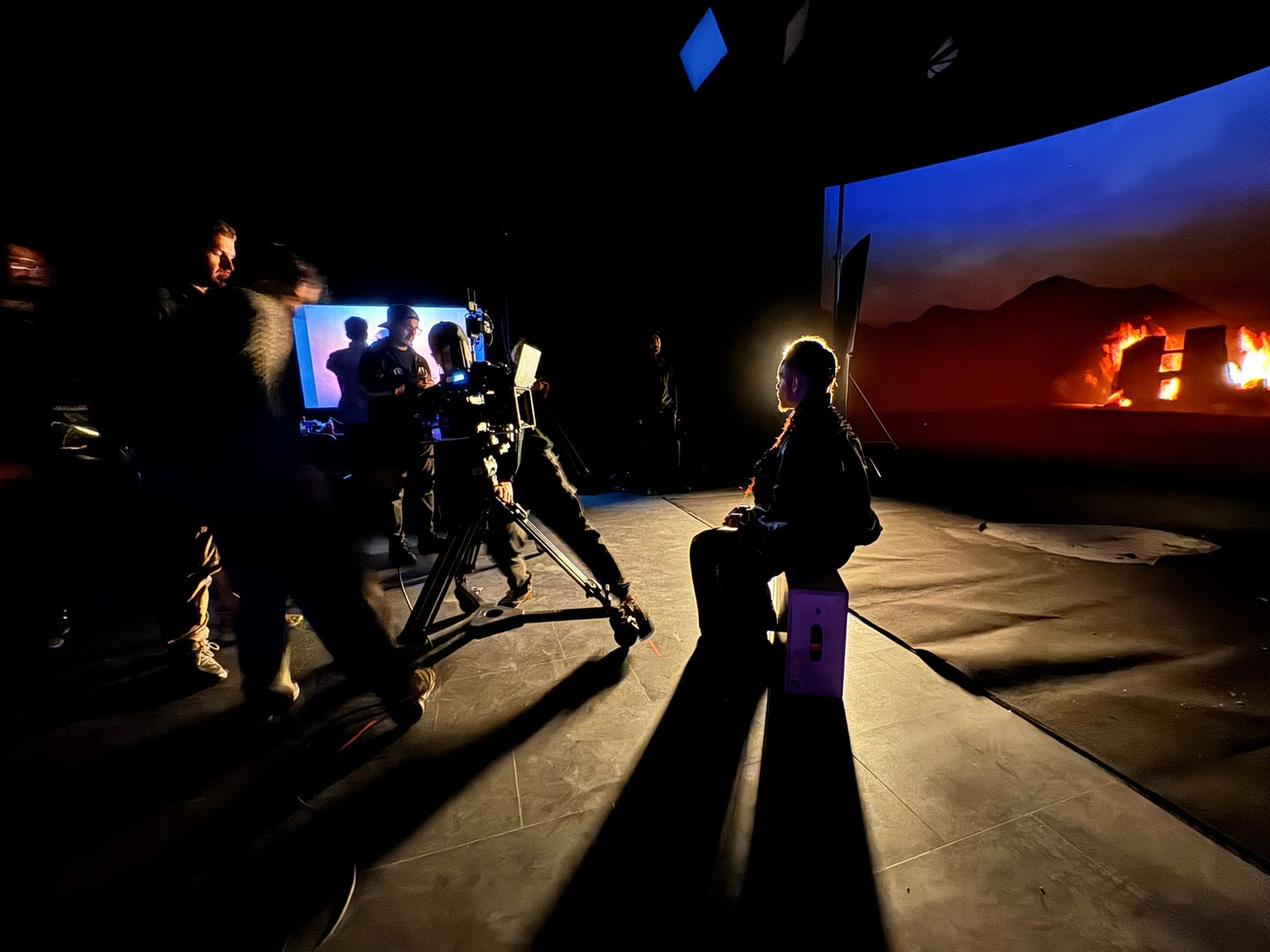
Lighting isn’t just visibility. It’s pressure. Hard light can feel clinical. Soft light can feel intimate. Side light can feel tense. Backlight can feel like memory. The key is consistency: atmosphere collapses when lighting doesn’t match the emotional logic of the scene.
Ask what the light is doing to the subject. Is it revealing them or protecting them? Is it stable or shifting? Is it flattering or punishing?
Space controls emotional distance
Atmosphere lives in framing and space. Wide negative space can feel isolating or watched. Tight framing can feel intimate or trapped. Center framing can feel composed; off-center can feel unstable. Blocking matters too: where someone stands, how they move, what they avoid, what they enter. These are emotional decisions disguised as technical ones.
Even clean images need texture, because emotion needs friction. Texture can be literal (grain, haze, fabric, concrete) or implied through lensing and lighting. The point isn’t “make it gritty.” It’s to make it tactile enough to feel real, without drawing attention to the technique.
Atmosphere isn’t only visual. Sound makes tension physical. Room tone tells you the size of a space. Reverb tells you how empty it is. Low frequency can signal threat before you see it. Silence is also a choice, not an absence—often the most atmospheric moments are when the mix pulls back and the viewer starts listening harder.
Rhythm shapes mood. Fast cuts can feel anxious. Long takes can feel controlled or uncomfortable. A slow push-in can feel inevitable; a sudden stop can feel like shock. You can have the right look and still miss the feeling if the pacing contradicts it.
Color grading supports atmosphere, but it can’t invent it. A good grade clarifies intention: cool shadows can create distance, warm falloff can feel nostalgic, a green shift can feel uneasy or artificial. Color should feel like part of the world, not an overlay.
How we approach atmosphere at K Studio
We treat atmosphere as a system, not a layer. We start with the emotional sentence, then translate it into rules: how light behaves, how space is framed, how much texture the world carries, what the rhythm feels like, how sound supports it. Those rules guide decisions from concept through post so the feeling survives real production constraints instead of drifting.
A quick checklist
Define the feeling in one sentence.
Set lighting rules that support it.
Use framing and space to control distance.
Add texture with restraint.
Design sound and silence intentionally.
Match pacing to mood.
Grade to clarify, not to compensate.
Atmosphere is what makes a frame stay with you. It’s not budget or gear. It’s intention—held consistently from idea to final delivery.
Atmosphere isn’t decoration.
It’s a narrative tool: the invisible force that tells the audience how to feel before anything is explained. It can make a room feel dangerous even when nothing happens, or make a face feel intimate from across the room. When people say something feels “cinematic,” they’re often reacting to atmosphere.
Atmosphere is the relationship between elements, not a single trick. Light, space, texture, rhythm, and sound combine into one emotional logic. A bright scene can still feel cold. A dark scene can still feel safe. That’s the work: shaping perception.
Start with a feeling, not a look
A common mistake is chasing aesthetics first. A “cool” look without emotional purpose turns into noise. A better starting point is one sentence:
“This should feel like a secret.”
“This should feel clean, but uneasy.”
“This should feel expensive, but lonely.”
Once the feeling is defined, everything else gets a job.
Lighting isn’t just visibility. It’s pressure. Hard light can feel clinical. Soft light can feel intimate. Side light can feel tense. Backlight can feel like memory. The key is consistency: atmosphere collapses when lighting doesn’t match the emotional logic of the scene.
Ask what the light is doing to the subject. Is it revealing them or protecting them? Is it stable or shifting? Is it flattering or punishing?
Space controls emotional distance
Atmosphere lives in framing and space. Wide negative space can feel isolating or watched. Tight framing can feel intimate or trapped. Center framing can feel composed; off-center can feel unstable. Blocking matters too: where someone stands, how they move, what they avoid, what they enter. These are emotional decisions disguised as technical ones.
Even clean images need texture, because emotion needs friction. Texture can be literal (grain, haze, fabric, concrete) or implied through lensing and lighting. The point isn’t “make it gritty.” It’s to make it tactile enough to feel real, without drawing attention to the technique.
Atmosphere isn’t only visual. Sound makes tension physical. Room tone tells you the size of a space. Reverb tells you how empty it is. Low frequency can signal threat before you see it. Silence is also a choice, not an absence—often the most atmospheric moments are when the mix pulls back and the viewer starts listening harder.
Rhythm shapes mood. Fast cuts can feel anxious. Long takes can feel controlled or uncomfortable. A slow push-in can feel inevitable; a sudden stop can feel like shock. You can have the right look and still miss the feeling if the pacing contradicts it.
Color grading supports atmosphere, but it can’t invent it. A good grade clarifies intention: cool shadows can create distance, warm falloff can feel nostalgic, a green shift can feel uneasy or artificial. Color should feel like part of the world, not an overlay.
How we approach atmosphere at K Studio
We treat atmosphere as a system, not a layer. We start with the emotional sentence, then translate it into rules: how light behaves, how space is framed, how much texture the world carries, what the rhythm feels like, how sound supports it. Those rules guide decisions from concept through post so the feeling survives real production constraints instead of drifting.
A quick checklist
Define the feeling in one sentence.
Set lighting rules that support it.
Use framing and space to control distance.
Add texture with restraint.
Design sound and silence intentionally.
Match pacing to mood.
Grade to clarify, not to compensate.
Atmosphere is what makes a frame stay with you. It’s not budget or gear. It’s intention—held consistently from idea to final delivery.
Simplicity as a Strategy
By Rob on March 22, 2026
Atmosphere isn’t decoration.
It’s a narrative tool: the invisible force that tells the audience how to feel before anything is explained. It can make a room feel dangerous even when nothing happens, or make a face feel intimate from across the room. When people say something feels “cinematic,” they’re often reacting to atmosphere.
Atmosphere is the relationship between elements, not a single trick. Light, space, texture, rhythm, and sound combine into one emotional logic. A bright scene can still feel cold. A dark scene can still feel safe. That’s the work: shaping perception.
Start with a feeling, not a look
A common mistake is chasing aesthetics first. A “cool” look without emotional purpose turns into noise. A better starting point is one sentence:
“This should feel like a secret.”
“This should feel clean, but uneasy.”
“This should feel expensive, but lonely.”
Once the feeling is defined, everything else gets a job.
Lighting isn’t just visibility. It’s pressure. Hard light can feel clinical. Soft light can feel intimate. Side light can feel tense. Backlight can feel like memory. The key is consistency: atmosphere collapses when lighting doesn’t match the emotional logic of the scene.
Ask what the light is doing to the subject. Is it revealing them or protecting them? Is it stable or shifting? Is it flattering or punishing?
Space controls emotional distance
Atmosphere lives in framing and space. Wide negative space can feel isolating or watched. Tight framing can feel intimate or trapped. Center framing can feel composed; off-center can feel unstable. Blocking matters too: where someone stands, how they move, what they avoid, what they enter. These are emotional decisions disguised as technical ones.
Even clean images need texture, because emotion needs friction. Texture can be literal (grain, haze, fabric, concrete) or implied through lensing and lighting. The point isn’t “make it gritty.” It’s to make it tactile enough to feel real, without drawing attention to the technique.
Atmosphere isn’t only visual. Sound makes tension physical. Room tone tells you the size of a space. Reverb tells you how empty it is. Low frequency can signal threat before you see it. Silence is also a choice, not an absence—often the most atmospheric moments are when the mix pulls back and the viewer starts listening harder.
Rhythm shapes mood. Fast cuts can feel anxious. Long takes can feel controlled or uncomfortable. A slow push-in can feel inevitable; a sudden stop can feel like shock. You can have the right look and still miss the feeling if the pacing contradicts it.
Color grading supports atmosphere, but it can’t invent it. A good grade clarifies intention: cool shadows can create distance, warm falloff can feel nostalgic, a green shift can feel uneasy or artificial. Color should feel like part of the world, not an overlay.
How we approach atmosphere at K Studio
We treat atmosphere as a system, not a layer. We start with the emotional sentence, then translate it into rules: how light behaves, how space is framed, how much texture the world carries, what the rhythm feels like, how sound supports it. Those rules guide decisions from concept through post so the feeling survives real production constraints instead of drifting.
A quick checklist
Define the feeling in one sentence.
Set lighting rules that support it.
Use framing and space to control distance.
Add texture with restraint.
Design sound and silence intentionally.
Match pacing to mood.
Grade to clarify, not to compensate.
Atmosphere is what makes a frame stay with you. It’s not budget or gear. It’s intention—held consistently from idea to final delivery.
Atmosphere isn’t decoration.
It’s a narrative tool: the invisible force that tells the audience how to feel before anything is explained. It can make a room feel dangerous even when nothing happens, or make a face feel intimate from across the room. When people say something feels “cinematic,” they’re often reacting to atmosphere.
Atmosphere is the relationship between elements, not a single trick. Light, space, texture, rhythm, and sound combine into one emotional logic. A bright scene can still feel cold. A dark scene can still feel safe. That’s the work: shaping perception.
Start with a feeling, not a look
A common mistake is chasing aesthetics first. A “cool” look without emotional purpose turns into noise. A better starting point is one sentence:
“This should feel like a secret.”
“This should feel clean, but uneasy.”
“This should feel expensive, but lonely.”
Once the feeling is defined, everything else gets a job.
Lighting isn’t just visibility. It’s pressure. Hard light can feel clinical. Soft light can feel intimate. Side light can feel tense. Backlight can feel like memory. The key is consistency: atmosphere collapses when lighting doesn’t match the emotional logic of the scene.
Ask what the light is doing to the subject. Is it revealing them or protecting them? Is it stable or shifting? Is it flattering or punishing?
Space controls emotional distance
Atmosphere lives in framing and space. Wide negative space can feel isolating or watched. Tight framing can feel intimate or trapped. Center framing can feel composed; off-center can feel unstable. Blocking matters too: where someone stands, how they move, what they avoid, what they enter. These are emotional decisions disguised as technical ones.
Even clean images need texture, because emotion needs friction. Texture can be literal (grain, haze, fabric, concrete) or implied through lensing and lighting. The point isn’t “make it gritty.” It’s to make it tactile enough to feel real, without drawing attention to the technique.
Atmosphere isn’t only visual. Sound makes tension physical. Room tone tells you the size of a space. Reverb tells you how empty it is. Low frequency can signal threat before you see it. Silence is also a choice, not an absence—often the most atmospheric moments are when the mix pulls back and the viewer starts listening harder.
Rhythm shapes mood. Fast cuts can feel anxious. Long takes can feel controlled or uncomfortable. A slow push-in can feel inevitable; a sudden stop can feel like shock. You can have the right look and still miss the feeling if the pacing contradicts it.
Color grading supports atmosphere, but it can’t invent it. A good grade clarifies intention: cool shadows can create distance, warm falloff can feel nostalgic, a green shift can feel uneasy or artificial. Color should feel like part of the world, not an overlay.
How we approach atmosphere at K Studio
We treat atmosphere as a system, not a layer. We start with the emotional sentence, then translate it into rules: how light behaves, how space is framed, how much texture the world carries, what the rhythm feels like, how sound supports it. Those rules guide decisions from concept through post so the feeling survives real production constraints instead of drifting.
A quick checklist
Define the feeling in one sentence.
Set lighting rules that support it.
Use framing and space to control distance.
Add texture with restraint.
Design sound and silence intentionally.
Match pacing to mood.
Grade to clarify, not to compensate.
Atmosphere is what makes a frame stay with you. It’s not budget or gear. It’s intention—held consistently from idea to final delivery.